
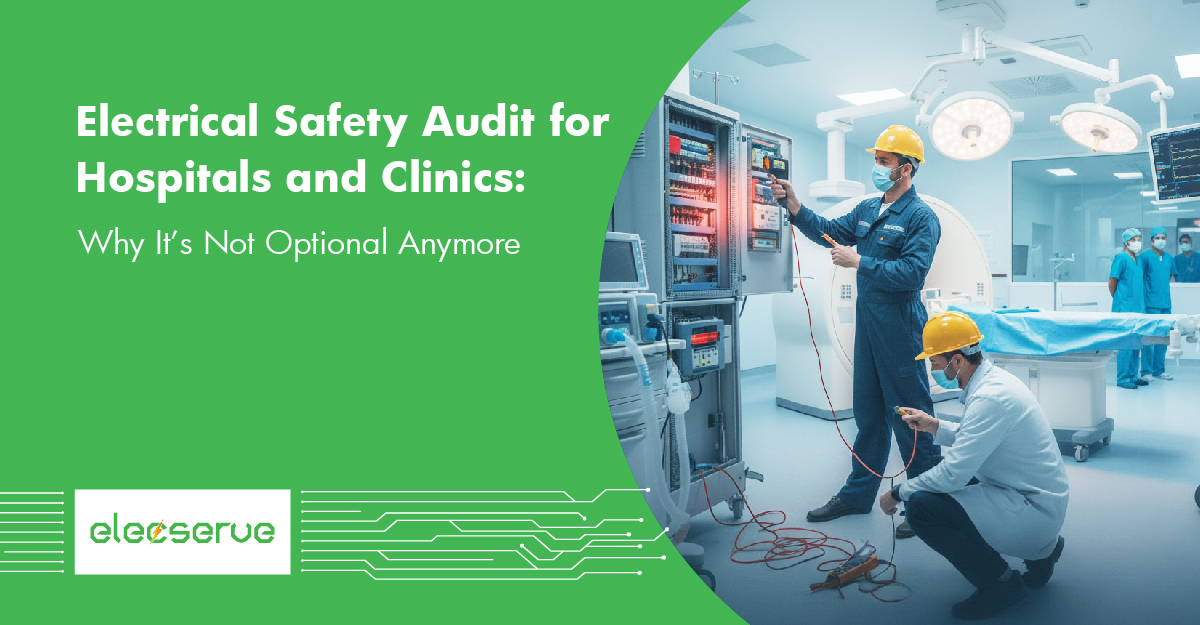
If you manage or own a hospital or clinic, you already carry a huge responsibility—people’s lives. Now imagine a short circuit in an ICU, an overloaded panel in an OT, or faulty earthing near medical equipment. These are not “rare cases.” They happen more often than most people like to admit.
I’ve personally seen situations where a simple electrical issue caused equipment shutdowns during critical hours. The problem was not poor equipment—it was lack of inspection. That’s where an electrical safety audit for hospitals and clinics becomes essential, not optional.
In this blog, I’ll explain why electrical safety audits matter, how they work, and why hospitals in Mumbai and Thane are now taking them seriously. If safety, compliance, and uninterrupted operations matter to you, this will be worth your time.
Why Hospitals and Clinics Face Higher Electrical Risks
Hospitals don’t use electricity the same way homes or offices do. They depend on it every second.
Think about it:
- Life-support machines running 24/7
- MRI, CT scan, and X-ray equipment
- Emergency power systems
- Sensitive electronic monitors
Even a small voltage fluctuation can damage equipment or delay treatment.
In one clinic I visited, a minor earthing issue caused repeated failures in diagnostic machines. The management initially blamed the equipment vendor. After an audit, the real cause was found in the internal wiring. Fixing it saved them repeated repair costs and downtime.
This is exactly why electrical safety audit services in Mumbai are becoming a priority for healthcare facilities.
What Is an Electrical Safety Audit for Hospitals and Clinics?
An electrical safety audit is a detailed inspection of your entire electrical system. It checks whether everything is safe, compliant, and capable of handling your load.
For hospitals and clinics, the audit usually includes:
- Load analysis and distribution checks
- Condition of wiring, panels, and breakers
- Earthing and bonding verification
- Backup power and DG set inspection
- Fire risk assessment due to electrical faults
- Compliance with safety standards
The goal is simple: prevent failures before they happen.
At Elecserve Tech Solutions, audits are conducted in a way that does not disturb patient care, which is critical for hospitals.
Common Electrical Issues Found in Hospitals During Audits
Most hospital administrators are surprised when audit reports come in. Many issues stay hidden for years.
Here are some common problems found during audits:
Overloaded Panels
Hospitals often add new equipment over time without upgrading panels. This leads to overheating and fire risks.
Improper Earthing
Medical equipment needs stable earthing. Poor earthing can cause shocks or equipment malfunction.
Aging Wiring
Older hospitals still run on wiring installed decades ago. Insulation breakdown is a serious hazard.
Faulty Backup Systems
DG sets and UPS systems look fine until an actual power failure occurs. Audits often reveal delayed switching or capacity issues.
One hospital in Thane avoided a major shutdown after an audit revealed their backup system wouldn’t support ICU load during a blackout.
This is why electrical safety audit services in Thane are no longer seen as a formality but as a safety step.
Why Mumbai and Thane Hospitals Need Regular Electrical Safety Audits
Mumbai and Thane face unique challenges:
- High humidity affecting insulation
- Old buildings converted into clinics
- Increasing power demand
- Strict fire and safety rules
Hospitals here cannot afford electrical failures—not legally, not ethically.
Regular audits help hospitals:
- Meet fire safety and electrical compliance norms
- Reduce insurance risks
- Avoid penalties during inspections
- Improve patient and staff safety
Many hospitals now schedule audits annually, especially after expansions or renovations.
Facilities using professional electrical safety audit services in Mumbai report fewer emergency breakdowns and smoother inspections.
How an Electrical Safety Audit Helps Hospital Management
From a management point of view, audits are not just about safety—they’re about control.
Here’s how audits help decision-makers:
Better Planning
You know which systems need upgrades and which can wait.
Cost Savings
Fixing a small fault early is cheaper than replacing damaged equipment later.
Legal Protection
Audit reports act as proof that you followed safety practices.
Staff Confidence
Doctors and nurses work better when they trust their environment.
One hospital administrator shared that after their audit, staff complaints about equipment issues dropped sharply. That’s a real result.
When Should Hospitals Schedule an Electrical Safety Audit?
Many people ask this question. Based on experience, audits should be done:
- Before opening a new hospital or clinic
- After major renovations or equipment upgrades
- If your building is over 5 years old
- After repeated power failures or equipment damage
- At least once every year for active hospitals
Waiting for a problem is the most expensive approach.
Hospitals in Mumbai and Thane that follow a yearly audit schedule are far better prepared during inspections and emergencies.
Choosing the Right Electrical Safety Audit Partner
Not all audits are equal. Hospitals need professionals who understand medical environments.
Look for audit providers who:
- Have experience with hospitals and clinics
- Provide clear reports, not technical confusion
- Offer practical solutions, not just problem lists
- Follow safety standards relevant to healthcare
The right audit partner becomes part of your safety planning, not just a one-time inspector.
FAQs
1. Is an electrical safety audit mandatory for hospitals?
While rules vary, most fire and safety regulations strongly recommend audits for hospitals due to high risk.
2. How long does an electrical safety audit take?
For small clinics, it may take a day. Large hospitals may require several days depending on size and systems.
3. Will patient services be disturbed during the audit?
No. Professional auditors plan inspections to avoid disruption to medical services.
4. How often should hospitals in Mumbai and Thane conduct audits?
Ideally once a year, or after any major electrical or structural changes.
